
What Your Poop Says About Your Health: A Complete Guide to Color, Shape and Frequency
Let's be honest: nobody wants to talk about poop. But your stool is one of the easiest and most honest health indicators you have. Doctors and gastroenterologists check it for a reason. What your poop says about your health can reveal problems with digestion, hydration, diet, stress and, in some cases, serious medical conditions.
In this guide, you'll learn what a healthy bowel movement looks like, what poop color and shape mean, how often you should go, and the warning signs that mean it's time to call a doctor.
What Does Healthy Poop Look Like?
A healthy stool is usually:
Brown, ranging from light to dark brown
Soft but formed, like a smooth sausage or snake
Easy to pass, without straining or pain
Mild in odor (never completely odorless, but not overwhelming)
Sinking or slowly floating in the toilet bowl
If your poop matches most of these, your digestive system is likely working well.
How Often Should You Poop?
There is no single "perfect" number. Most healthy adults poop anywhere from three times a day to three times a week. What matters most is your normal pattern. A sudden, lasting change (for example, going from once a day to once every four days) is worth paying attention to.
May point to constipation.
May point to diarrhea or an infection.
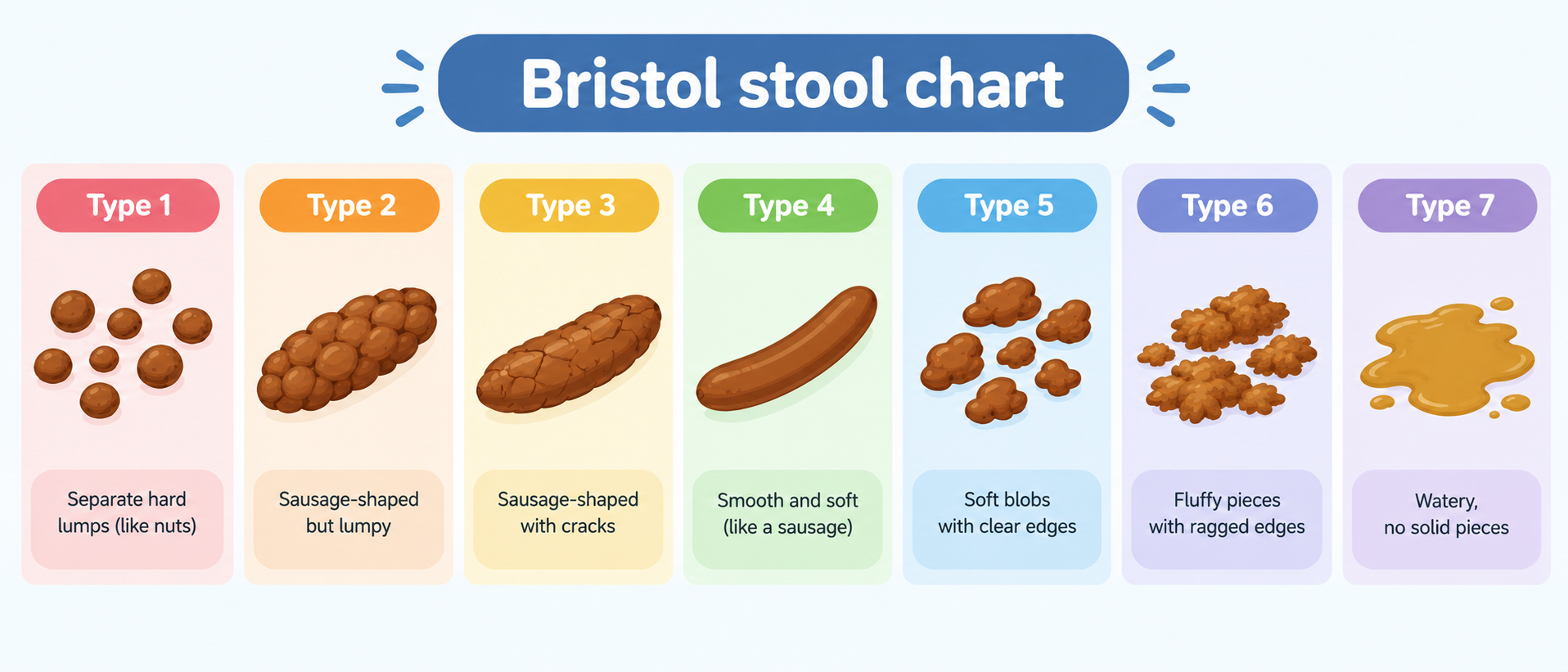
The Bristol Stool Chart: What Poop Shape Tells You
Doctors use the Bristol Stool Chart to classify stool into seven types:
| Type | Appearance | What It Suggests |
|---|---|---|
| Type 1 | Separate hard lumps, like nuts | Severe constipation |
| Type 2 | Lumpy, sausage-shaped | Mild constipation |
| Type 3 | Sausage with cracks on the surface | Normal |
| Type 4 | Smooth, soft sausage or snake | Ideal, healthy stool |
| Type 5 | Soft blobs with clear edges | Lacking fiber, trending loose |
| Type 6 | Mushy, fluffy pieces with ragged edges | Mild diarrhea |
| Type 7 | Entirely liquid, no solid pieces | Diarrhea |
Types 3 and 4 are considered ideal. Types 1 and 2 suggest slow transit and dehydration or low fiber. Types 6 and 7 suggest food moving through the gut too fast.
What Poop Color Means
Stool color comes mainly from bile and what you eat. Here is what different shades can mean.
Brown: Normal
Bile pigments turn stool brown. This is the color you want to see.
Green Poop
Green stool is often harmless. Common causes include eating lots of leafy greens, green food coloring, or iron supplements. It can also happen when food moves through your intestines too quickly (such as with diarrhea) and bile doesn't have time to break down fully.
Yellow, Greasy or Foul-Smelling Poop
Yellow, oily stool that floats and smells especially bad may signal that your body isn't absorbing fat properly. Possible causes include celiac disease, pancreatic problems, gallbladder or liver issues, and infections like giardia. Persistent yellow stool deserves a medical check.
Black Poop
Black, tarry stool can indicate bleeding in the upper digestive tract, such as the stomach or esophagus. However, iron supplements, bismuth medicines (like Pepto-Bismol) and black licorice can also cause dark stool. If it is sticky, tar-like and has a strong odor, seek medical care promptly.
Red or Bloody Poop
Bright red blood often comes from the lower digestive tract. Hemorrhoids and small anal tears are common, harmless causes. But red stool can also be caused by infections, inflammatory bowel disease or colorectal conditions. Beets, tomato juice and red gelatin can mimic blood. If you aren't sure, get it checked.
Pale, Clay-Colored or White Poop
Light stool may mean bile isn't reaching your intestines, which can point to a blocked bile duct, gallbladder disease, liver or pancreas problems. Some medications can also cause it. Don't ignore pale stools that persist.
Other Things Your Poop Can Reveal
Floating Poop
Occasional floating stool is usually due to extra gas or something you ate. Persistent floating, greasy stool may suggest fat malabsorption.
Very Smelly Poop
Some odor is normal. A sudden, unusually foul smell can be linked to infections, food intolerances (like lactose), or malabsorption.
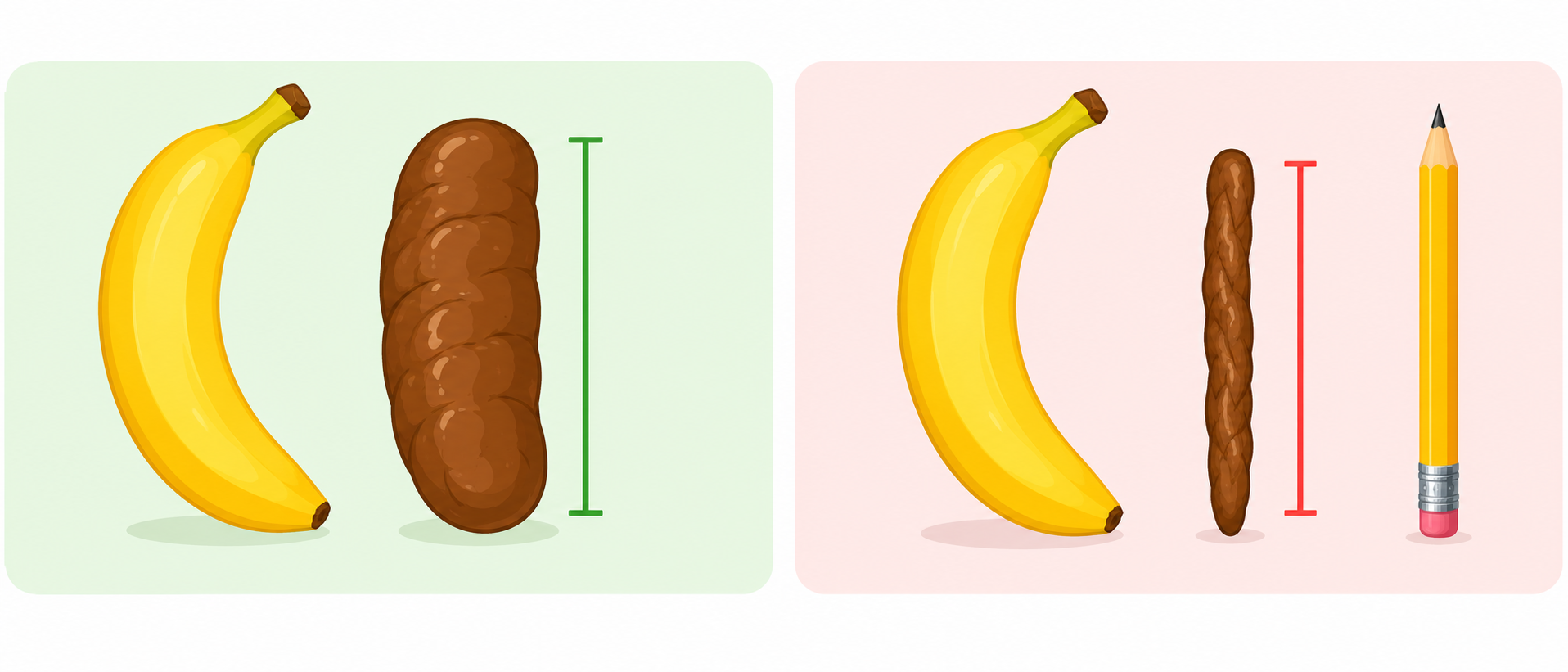
Thin, Pencil-Like Stool
Occasionally normal, but ongoing narrow stools can signal an obstruction or narrowing in the colon and should be evaluated.
Mucus in Stool
A little mucus is normal. Large amounts, especially with pain, blood or changes in bowel habits, can be linked to irritable bowel syndrome (IBS), infection or inflammatory bowel disease.
Undigested Food
Seeing bits of corn, seeds or vegetable fiber is common because these are hard to digest. Frequent undigested food along with diarrhea or weight loss is worth discussing with a doctor.
What Affects Your Poop?
Several everyday factors change how your stool looks and behaves:
Diet: Fiber, fat, dairy and artificial sweeteners all play a role.
Hydration: Too little water leads to hard, dry stool.
Stress and anxiety: The gut and brain are closely linked, and stress can trigger diarrhea or constipation.
Medications and supplements: Antibiotics, iron, antacids and painkillers can all change stool.
Physical activity: Regular movement helps keep your bowels regular.
Sleep and travel: Disrupted routines often disrupt digestion.
How to Improve Your Poop Health
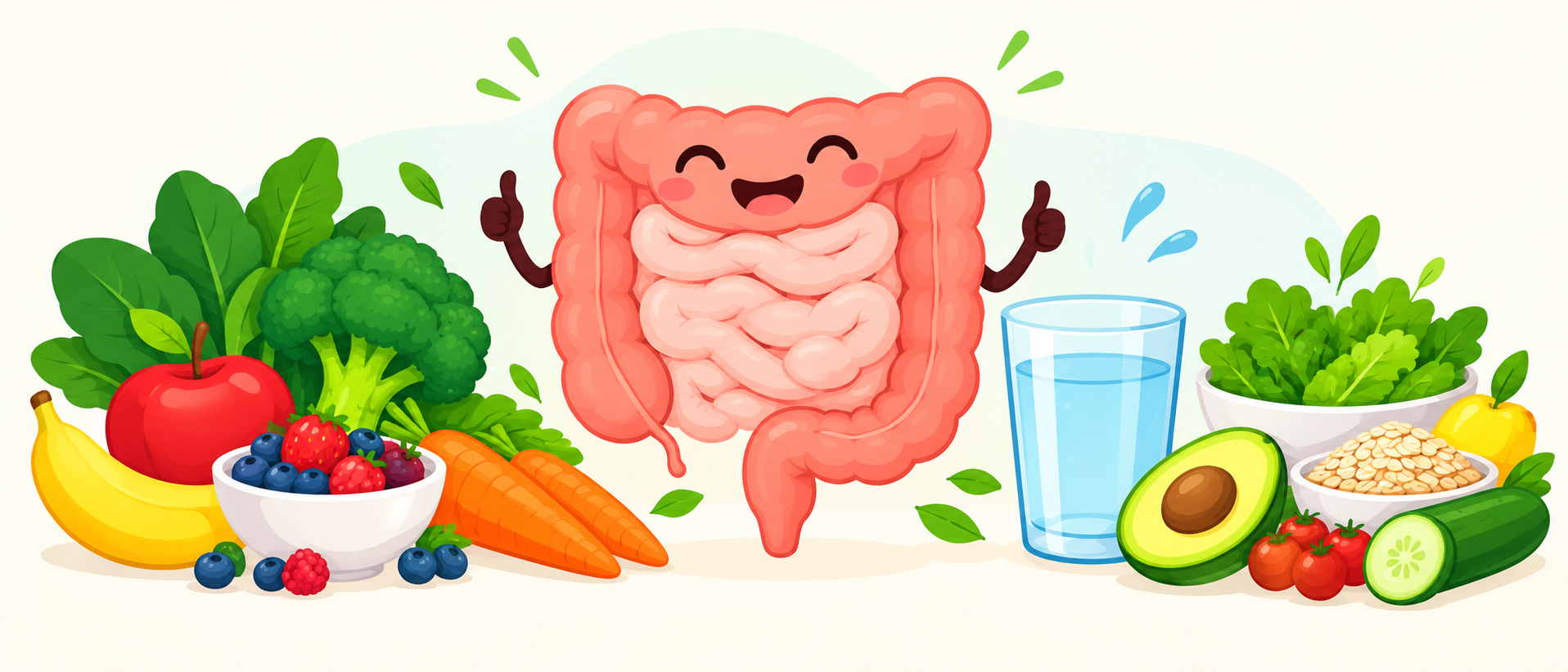
- ✓ Eat more fiber from vegetables, fruits, oats, legumes and whole grains.
- ✓ Drink enough water throughout the day.
- ✓ Exercise regularly, even a daily walk.
- ✓ Add probiotic foods like yogurt, kefir and fermented vegetables.
- ✓ Don't hold it in. Go when you feel the urge.
- ✓ Manage stress with sleep, breathing exercises or movement.
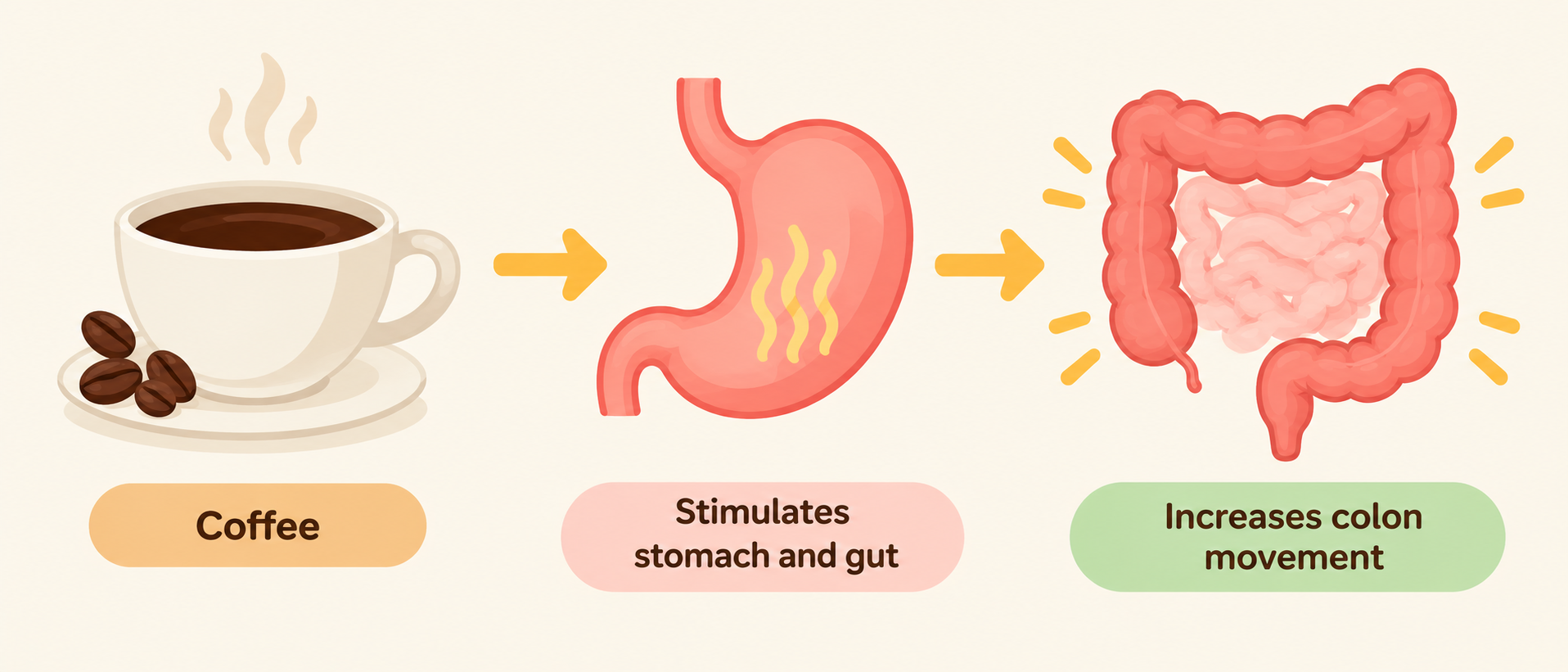
- ✓ Limit ultra-processed foods, excess alcohol and too much caffeine.
⚠️ When to See a Doctor
Contact a healthcare professional if you notice:
- • Blood in your stool or black, tarry stool
- • Pale or white stool that persists
- • Diarrhea lasting more than a few days
- • Constipation lasting more than a couple of weeks
- • Unexplained weight loss
- • Severe or ongoing abdominal pain
- • A lasting change in your usual bowel habits, especially after age 45
- • Fever, vomiting or signs of dehydration along with stool changes
Final Thoughts
Your poop is a daily report card for your digestive health. Paying attention to its color, shape, frequency and smell helps you catch problems early and understand how your diet and lifestyle are affecting your body. Most changes are harmless and short-lived, but persistent or alarming symptoms should never be ignored.
Have questions about your gut health? Leave a comment below or share this guide with someone who needs it.
Clinical FAQs & Expert Guidance
Is it normal to poop every day?
Why is my poop green?
Is floating poop healthy?
What does unhealthy poop look like?
Can stress change my poop?
How long should pooping take?
FURTHER READING
Poop Identifier Clinical Editorial — Gastroenterology & AI Heuristics Research Team
All recommendations reviewed against Bristol Stool standards and peer-reviewed gastroenterology literature. Content is informational and not a substitute for formal medical evaluation by a licensed healthcare provider.
Know What Your Poop Is Telling You in Seconds
No server uploads or guesswork needed. Our on-device AI scans transit metrics locally with 100% privacy.
SCAN STOOL FREE→